Paprika extract ingredients are gaining significant attention globally due to their versatile applications across various industries, particularly in food, pharmaceuticals, and cosmetics. The demand for natural colorants and antioxidants is driving increased interest in paprika, leading to innovations in extraction techniques and quality control. Understanding the composition and properties of paprika extract ingredients is crucial for optimizing its use and ensuring consumer safety. This exploration delves into the key aspects of these ingredients, their global impact, and future trends.
The increasing consumer preference for natural and clean-label products is a major catalyst for the growth of the paprika extract ingredients market. This trend, coupled with rising health consciousness, fuels the demand for ingredients with antioxidant properties. Global trade regulations and food safety standards also play a critical role, demanding rigorous quality control and traceability of paprika extract ingredients throughout the supply chain. The industry faces challenges related to sustainable sourcing and maintaining consistent quality.
Paprika extract ingredients, derived from dried fruits of Capsicum annuum, provide a natural alternative to synthetic colorants and preservatives. Its ability to enhance both the visual appeal and nutritional value of products makes it indispensable in numerous formulations. This understanding is essential for industries aiming to meet evolving consumer needs and regulatory requirements while promoting sustainable practices.
Introduction to Paprika Extract Ingredients
Paprika extract ingredients represent a natural and versatile solution for coloring and flavoring a wide range of food products. Sourced from the Capsicum pepper family, these extracts offer a spectrum of colors, ranging from bright red to orange, depending on the specific pepper variety and extraction process. The inherent antioxidant properties further enhance the value of these ingredients.
The growing demand for natural food additives has positioned paprika extract ingredients as a key component in the food industry’s shift towards healthier and more sustainable practices. Ongoing research focuses on optimizing extraction methods to maximize yield and purity while minimizing environmental impact. Utilizing paprika extract ingredients is becoming increasingly prevalent.
Defining Paprika Extract Ingredients
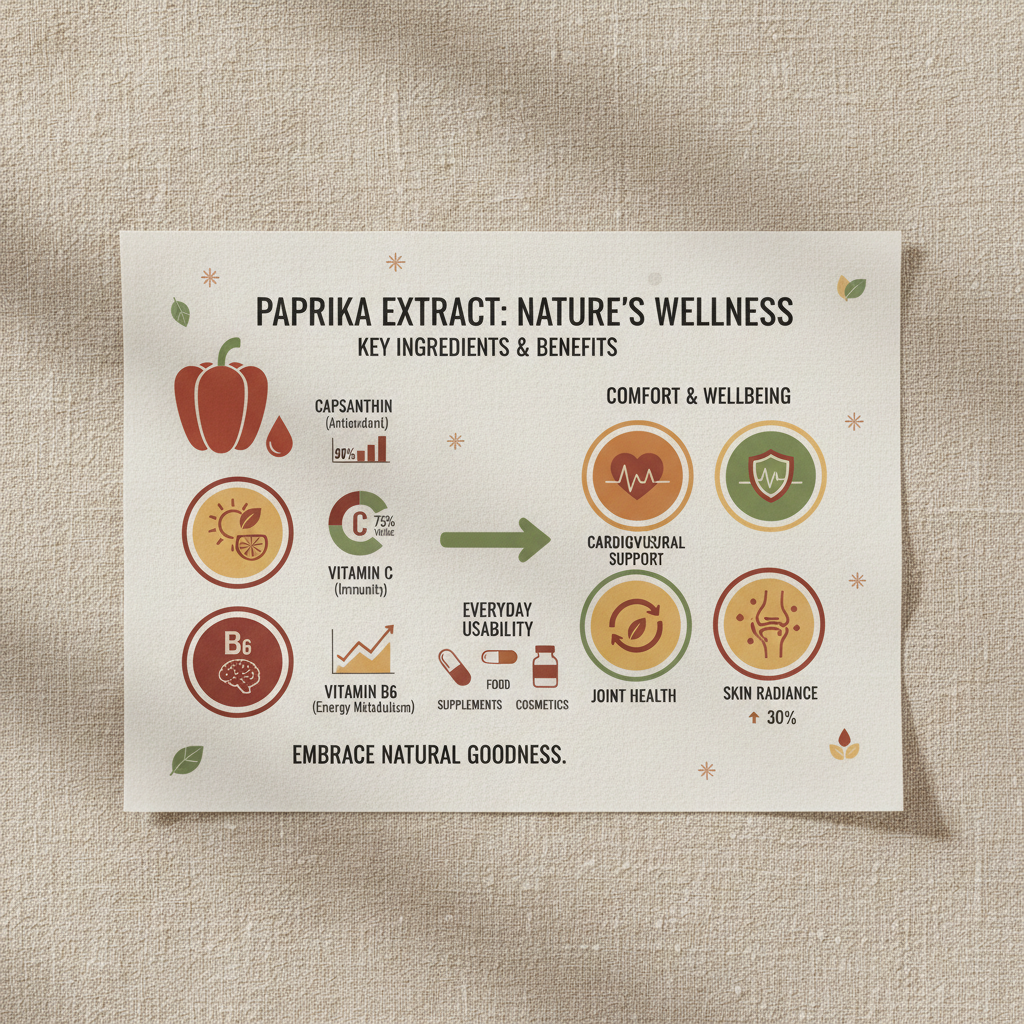
Paprika extract ingredients are concentrated solutions derived from the fruits of Capsicum annuum, specifically selected for their color and flavor profiles. These ingredients typically contain carotenoids, primarily capsanthin and capsorubin, which are responsible for the vibrant red hue. The extraction process involves solvent extraction, supercritical fluid extraction, or enzymatic methods to isolate these compounds.
These extracts are categorized based on their color strength (measured in ASTA units) and their specific carotenoid content. Different grades of paprika extract ingredients cater to varying application requirements, from providing subtle coloring to achieving intense shades in food and cosmetic products. Their connection to modern industry lies in the consumer demand for natural alternatives and clean-label formulations.
The role of paprika extract extends beyond just color; it also contributes to the overall sensory experience of food products, adding a subtly sweet and aromatic flavor. Its inherent antioxidant properties provide additional functional benefits, enhancing the shelf life and nutritional value of formulated foods.
Core Components of Paprika Extract
The core of paprika extract ingredients lies in their complex chemical composition. The dominant components are carotenoids like capsanthin, capsorubin, and beta-carotene, responsible for the color. Alongside these, the extract contains oleoresins, which contribute to the flavor and aroma, and various vitamins and minerals, offering nutritional benefits.
Another critical aspect is the presence of capsaicinoids, though typically in low concentrations in extracts intended for color. These compounds determine the pungency level, and careful selection of pepper varieties is vital to achieve the desired balance between color, flavor, and heat. Proper standardization is vital to assure quality and consistancy of paprika extract ingredients.
Furthermore, the extraction process significantly influences the final composition. Different solvents and techniques yield variations in carotenoid profiles and the presence of residual solvents, impacting the extract's quality and safety. Analytical methods like HPLC are essential for characterizing the extract’s composition and ensuring adherence to regulatory standards.
Global Applications and Use Cases
Paprika extract ingredients find widespread applications across the globe, primarily in the food industry. They are extensively used to color processed meats, sausages, paprika powder, spice blends, snack foods, and dairy products. The demand is particularly high in Europe, North America, and Asia, where consumers increasingly favor naturally colored foods.
Beyond food, paprika extract ingredients are gaining traction in the cosmetics industry as natural colorants in lipsticks, blush, and eyeshadows. The antioxidant properties are also leveraged in skincare formulations to protect against free radical damage. In regions with robust cosmetic industries like Japan and South Korea, this application is expanding rapidly.
Comparison of Paprika Extract Ingredient Applications
Advantages and Long-Term Value
The advantages of using paprika extract ingredients are multifaceted. Cost-effectively, they offer a natural alternative to synthetic dyes, reducing reliance on petroleum-based chemicals. Sustainability is enhanced through responsible sourcing and environmentally friendly extraction processes. The inherent antioxidant properties contribute to improved product quality and shelf life.
From a consumer perspective, paprika extract ingredients align with the growing demand for clean-label products and natural ingredients. This fosters trust and brand loyalty. Long-term value is also derived from the potential for developing innovative formulations with enhanced functionality, such as antioxidant-enriched foods and cosmetic products.
Future Trends and Innovations
Future trends in paprika extract ingredients are focused on improving extraction efficiency and developing novel applications. Research into supercritical fluid extraction and enzymatic methods aims to yield higher-purity extracts with reduced environmental impact. The development of microencapsulated paprika extracts will enhance stability and bioavailability.
Furthermore, the exploration of novel applications in nutraceuticals and functional foods is gaining momentum. The antioxidant properties of paprika extract ingredients could be leveraged to develop health-promoting products. Digitalization and blockchain technologies will enhance traceability and transparency throughout the supply chain, fostering consumer confidence.
Challenges and Solutions
Current challenges in the paprika extract ingredients industry include maintaining consistent quality, ensuring sustainable sourcing, and addressing price volatility. Variations in pepper variety, growing conditions, and extraction processes can lead to inconsistencies in color and carotenoid content.
Solutions involve implementing rigorous quality control standards, promoting sustainable farming practices, and investing in advanced extraction technologies. Traceability systems utilizing blockchain can help ensure the origin and authenticity of the ingredients. Collaboration between producers, processors, and researchers is crucial for overcoming these challenges.
Summary of Challenges and Corresponding Solutions
| Challenge |
Impact on Paprika Extract Ingredients |
Proposed Solution |
Implementation Timeline |
| Quality Inconsistency |
Variable color strength and carotenoid profiles. |
Implement standardized extraction protocols and rigorous quality testing. |
Short-term (6-12 months) |
| Sustainable Sourcing |
Environmental impact of pepper farming and potential for deforestation. |
Promote responsible farming practices and certifications (e.g., organic, Fair Trade). |
Medium-term (1-3 years) |
| Price Volatility |
Fluctuations in pepper yields and market demand affect ingredient cost. |
Establish long-term contracts with growers and explore hedging strategies. |
Medium-term (1-2 years) |
| Extraction Efficiency |
Low yield of carotenoids from traditional extraction methods. |
Invest in supercritical fluid extraction and enzymatic extraction technologies. |
Long-term (3-5 years) |
| Traceability Concerns |
Difficulty tracking the origin and authenticity of paprika extract. |
Implement blockchain-based traceability systems. |
Medium-term (2-3 years) |
| Regulatory Compliance |
Varying regulations regarding natural colorants in different countries. |
Maintain up-to-date knowledge of international regulations and certifications. |
Ongoing |
FAQS
Paprika oleoresin contains both the color compounds (carotenoids) and the flavor compounds (capsaicinoids and other volatile oils) of paprika. Paprika extract typically focuses on isolating the color compounds, resulting in a product primarily used for coloring. Oleoresin offers both color and flavor, while extract primarily provides color. Understanding these differences is critical for selecting the correct ingredient for a specific application.
The color strength of paprika extract is typically measured in ASTA (American Spice Trade Association) units. This measures the concentration of carotenoids, specifically capsanthin and capsorubin, which contribute to the red color. Higher ASTA units indicate a more intensely colored extract. A common range is 60,000 to 150,000 ASTA units, though this can vary based on pepper variety and extraction methods.
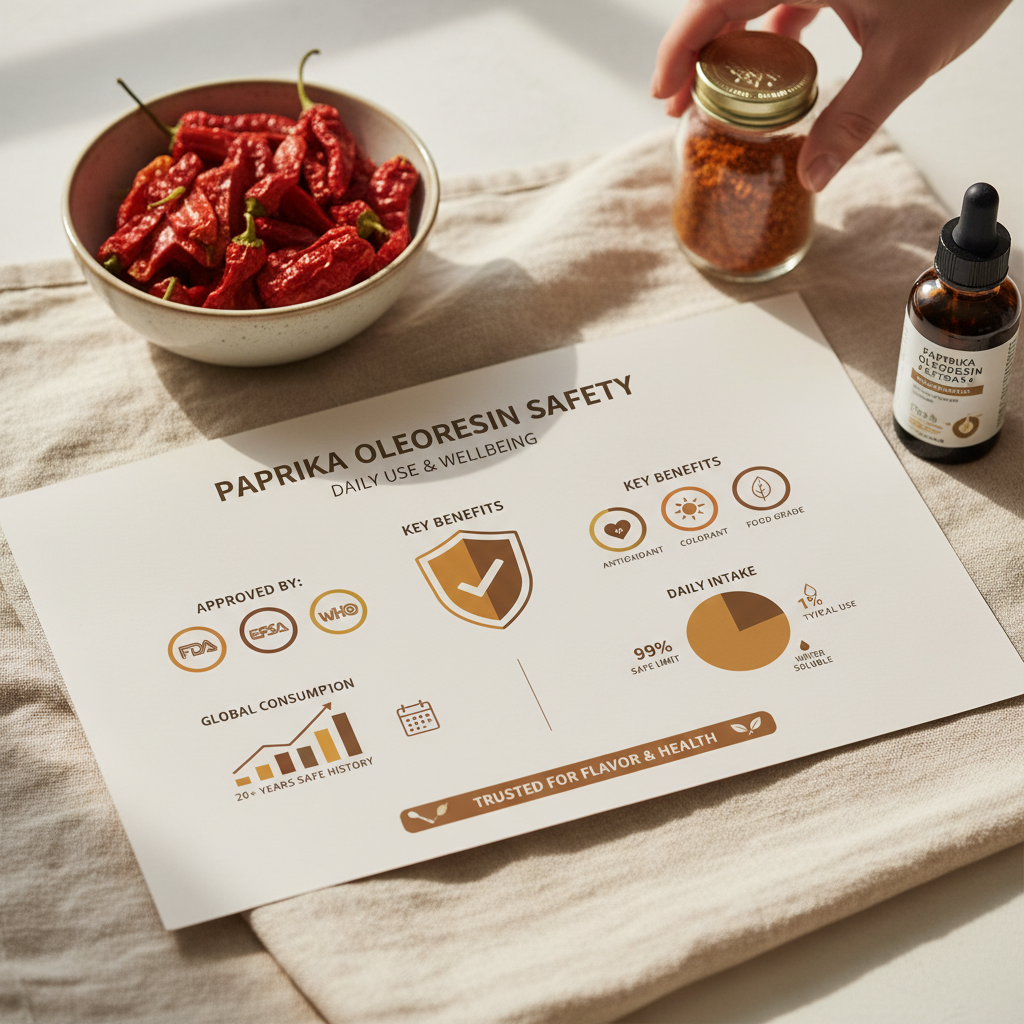
Paprika extract ingredients are generally recognized as safe (GRAS) by regulatory bodies like the FDA in the United States and are approved for use as a food colorant in many countries. However, regulations vary. Compliance requires adherence to specifications for purity, heavy metal content, and residual solvent levels. Detailed safety data sheets (SDS) are crucial for ensuring responsible use.
The extraction method significantly influences the quality of the extract. Supercritical fluid extraction (SFE) with CO2 is considered a superior method as it yields a high-purity extract with no residual solvents. Solvent extraction, while more common, requires careful selection and removal of solvents. Enzymatic extraction is emerging as a greener alternative but may require optimization for large-scale production.
Paprika extract can be a sustainable choice, but it depends on sourcing and production practices. Supporting farmers who employ responsible farming methods, minimizing water usage, and utilizing eco-friendly extraction techniques are vital. Choosing suppliers with sustainability certifications (e.g., organic) contributes to a more sustainable supply chain. Waste reduction from the pepper processing is also key.
Stability can be affected by light, oxygen, pH, and temperature. Encapsulation technologies can protect the carotenoids from degradation. Formulating with antioxidants and storing products in airtight, opaque packaging can also improve stability. The specific food matrix also plays a role; high-fat environments can offer some protection against oxidation.
Conclusion
Paprika extract ingredients represent a vibrant and versatile solution for a multitude of industries, driven by the increasing consumer demand for natural and sustainable products. Their unique properties – from providing natural coloration to offering antioxidant benefits – position them as key components in modern food, cosmetic, and nutraceutical formulations. Understanding the nuances of their composition, extraction, and application is crucial for optimizing their utilization and ensuring consistent quality.
Looking ahead, innovation in extraction technologies, coupled with a commitment to sustainable sourcing practices, will be essential for unlocking the full potential of paprika extract ingredients. Continued research into their health benefits and exploration of novel applications will further solidify their position as a valuable and sought-after ingredient in the global market. Visit our website to learn more about our range of high-quality paprika extract ingredients.



 English
  Afrikaans
  Albanian
  Amharic
  Arabic
  Armenian
  Azerbaijani
  Basque
  Belarusian
  Bengali
  Bosnian
  Bulgarian
  Catalan
  Cebuano
  Corsican
  Croatian
  Czech
Czech  Danish
  Dutch
Dutch  Esperanto
  Estonian
  Finnish
  French
  Frisian
  Galician
  Georgian
  German
  Greek
Greek  Gujarati
  Haitian Creole
  Hausa
Hausa  Hawaiian
  Hebrew
  Hindi
Hindi  Miao
Miao  Hungarian
  Icelandic
  Igbo
Igbo  Indonesian
  Irish
Irish  Italian
  Japanese
  Javanese
  Kannada
  Kazakh
  Khmer
Khmer  Rwandese
  Korean
  Kurdish
  Kyrgyz
  Lao
Lao  Latin
Latin  Latvian
  Lithuanian
  Luxembourgish
  Macedonian
  Malgashi
  Malay
Malay  Malayalam
  Maltese
  Maori
Maori  Marathi
  Mongolian
  Myanmar
  Nepali
  Norwegian
  Norwegian
  Occitan
  Pashto
  Persian
  Polish
  Portuguese
  Punjabi
  Romanian
  Russian
  Samoan
  Scottish Gaelic
  Serbian
  Sesotho
  Shona
Shona  Sindhi
  Sinhala
  Slovak
  Slovenian
  Somali
  Spanish
  Sundanese
  Swahili
  Swedish
  Tagalog
  Tajik
Tajik  Tamil
Tamil  Tatar
Tatar  Telugu
  Thai
Thai  Turkish
  Turkmen
  Ukrainian
  Urdu
Urdu  Uighur
  Uzbek
Uzbek  Vietnamese
  Welsh
Welsh  Bantu
Bantu  Yiddish
  Yoruba
  Zulu
Zulu