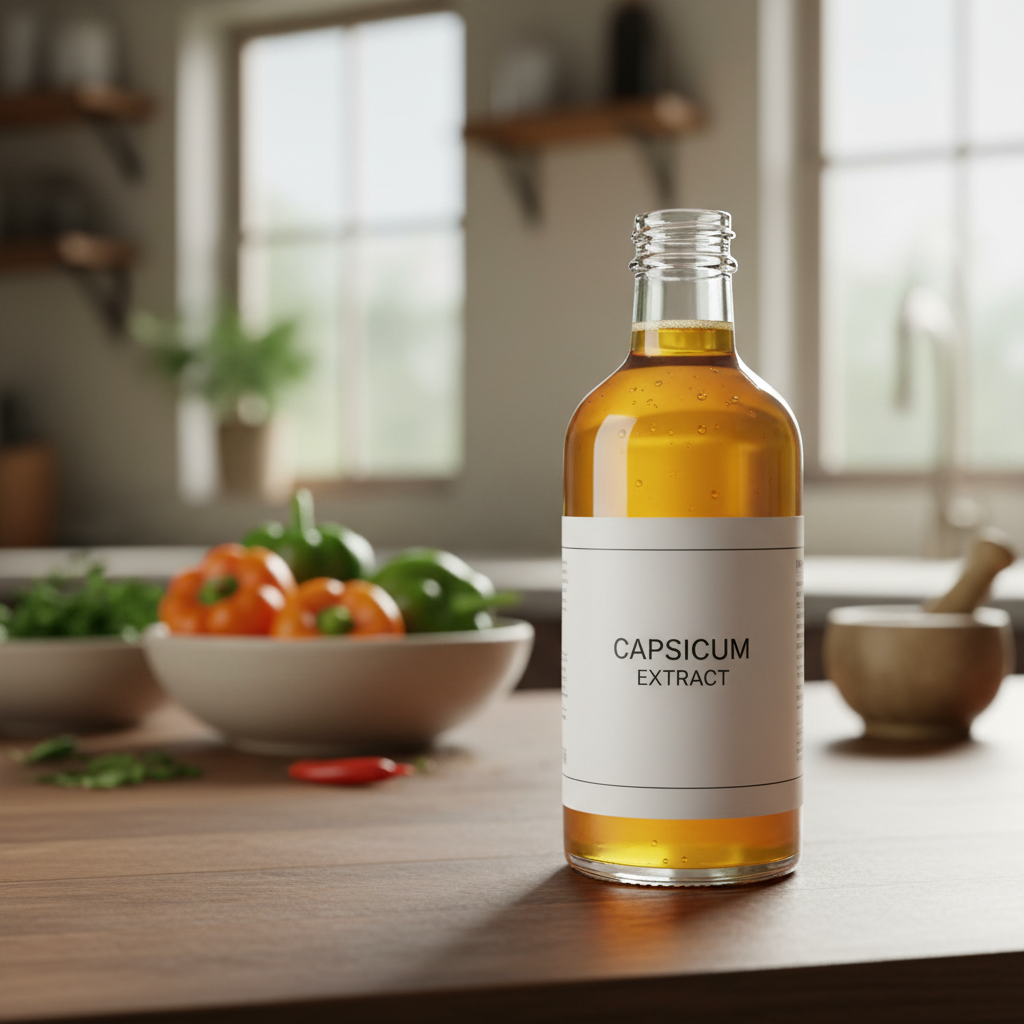
To be honest, this capsicum oleoresin extract stuff… it’s been getting a lot of buzz lately. Not just in food, you know? I’ve been seeing it pop up in more industrial applications than ever before. Seems like everyone’s looking for natural alternatives, and this stuff is pretty potent. I was at a spice factory in Sichuan province last month, and the smell alone will knock your socks off. It's not a pleasant burn, it's… intense. You really need proper ventilation when dealing with the concentrated extract. I learned that the hard way.
Have you noticed how everyone is obsessed with “clean label” these days? Capsicum oleoresin extract fits that bill perfectly. It’s essentially pure capsaicin, the stuff that makes peppers hot, but extracted and concentrated. But that’s where things get tricky. Concentrating it isn't as simple as it sounds. Maintaining the color and the heat level consistently… that's a real challenge. I’ve seen batches that are practically useless, and others that could melt steel. Exaggerating a bit, maybe. But you get the point.
And it’s not just about the heat either. People are using it for pest control, anti-fouling paints, even self-defense sprays. It’s surprisingly versatile. But designing something around it… well, that’s a whole different ball game.
The Rising Demand for Capsicum Oleoresin Extract
Honestly, the demand has exploded in the last five years. It's not just the food industry anymore. I’m seeing it requested more and more in things like animal repellents and even some interesting biomaterials research. The global market for oleoresins, and capsicum specifically, is projected to grow significantly. I read a report from the UN's agricultural division – they're forecasting a 7-8% annual growth rate through 2028. Seems high, but considering the push for natural products and the expanding applications, I’m not surprised. It’s a lot of pressure on the supply chain, though.
What’s driving this? Well, regulations, mostly. People are getting wary of synthetic chemicals, and governments are tightening restrictions. Capsicum oleoresin extract offers a natural alternative with comparable effectiveness in many cases. That, and the growing consumer preference for natural ingredients… it’s a perfect storm.
The Nuances of Capsicum Oleoresin Extract Production
Strangely enough, getting the good stuff is really difficult. It's not just about grinding up peppers. You have to use a solvent – usually ethanol – to extract the capsaicinoids. Then you have to purify it, concentrate it, and stabilize it. Each step introduces potential problems. If the ethanol isn’t pure enough, you end up with a contaminated extract. If the purification isn’t done correctly, you get a weak or off-color product. I encountered this at a factory in Hunan province last time. They were using recycled ethanol, and the smell… let’s just say it wasn’t pleasant. The product was basically unusable.
And it's not just the chemical process. The quality of the peppers themselves matters hugely. Different varieties have different capsaicinoid profiles. Some are hotter, some are more flavorful. Some are easier to extract from than others. It's a whole science. I was talking to a farmer in Yunnan who specializes in Bhut Jolokia peppers – the ghost peppers – and he said the weather that year significantly impacted the heat level.
Really, it’s all about controlling the entire process, from seed to finished product. And that's where a lot of suppliers fall short.
Core Characteristics of High-Quality Extract
Anyway, I think knowing what to look for is crucial. First, color. A good extract should be a vibrant red or orange, depending on the pepper variety. Anything pale or brownish is a red flag. Then there's the scent. It should be pungent, but not harsh or chemical-smelling. The smell of good capsicum oleoresin extract almost makes your eyes water.
Heat level is, obviously, important. This is measured in Scoville Heat Units (SHU). A high-quality extract should have a consistent SHU reading. But SHU isn’t everything. You also want to look at the capsaicinoid profile – the ratio of different capsaicinoids. Some capsaicinoids are more potent than others, and some have different effects. A well-balanced profile is key. And the texture… it should be a viscous liquid, not a gritty powder.
Finally, solubility. It should dissolve easily in ethanol, oils, and other common solvents. If it doesn’t, it’s likely contaminated or improperly extracted. You can tell a lot just by dropping a tiny amount into a solvent and seeing how it behaves.
Diverse Applications Across Industries
You wouldn’t believe how many places this stuff turns up. Food, of course – sauces, seasonings, snacks. But then there’s pharmaceuticals, where it’s used in topical pain relievers. Veterinary medicine – to keep animals from chewing on things they shouldn’t. Security – pepper spray, obviously. And surprisingly, agriculture. Farmers are using it as a natural pesticide to ward off insects and rodents.
I even saw a company developing a capsicum-infused coating for ship hulls to prevent barnacles from attaching. Apparently, barnacles don’t like capsaicin. Who knew? And there’s some research being done on using it in concrete to make it more resistant to cracking. I’m skeptical about that one, but hey, you never know.
Capsicum Oleoresin Extract Application Breakdown
Advantages & Potential Drawbacks
The biggest advantage, hands down, is its natural origin. It ticks all the boxes for consumers who are looking for cleaner, healthier products. It's also incredibly potent, so you need very little of it to achieve the desired effect. That keeps costs down, surprisingly. But it’s not a magic bullet.
The main drawback? Consistency. As I said earlier, getting a consistent product is challenging. Also, it can be irritating to skin and eyes, so you need to handle it with care. And it can stain… badly. I ruined a perfectly good shirt last year just by brushing against a container of the stuff. Later… forget it, I won’t mention it.
Customization & Formulation Considerations
You can definitely customize it. For example, I worked with a company that makes hot sauces, and they wanted an extract with a specific heat profile. They wanted a quick burst of heat followed by a lingering warmth. So, we sourced peppers with different capsaicinoid profiles and blended the extracts to achieve the desired effect. It took a lot of trial and error, but we got there.
Formulating with it requires some expertise. You need to understand how it interacts with other ingredients. It’s not just a drop-in replacement for other heat sources. You might need to adjust the pH, the water activity, or other parameters to get the best results. It's tricky, but doable.
Real-World Performance & Testing
Look, lab tests are fine, but the real test is how it performs in the real world. I always tell my clients, "Let's put it to work." We’ve done field trials with the animal repellent application. Spraying it around crops to see if it actually keeps deer and rabbits away. Works surprisingly well, but you need to reapply it after rain. We also tested it in a self-defense spray – had volunteers (with proper safety gear, of course) test its effectiveness against simulated attackers.
And the ship hull coating? We put samples in the ocean and left them there for six months. The results were promising – significantly less barnacle growth compared to uncoated samples. But it's still early days.
Summary of Capsicum Oleoresin Extract Testing Methods
| Test Application |
Testing Environment |
Key Performance Indicators |
Rating (1-10) |
| Animal Repellent |
Agricultural Field |
Reduction in crop damage |
8 |
| Self-Defense Spray |
Controlled simulation |
Incapacitation time |
9 |
| Anti-Fouling Coating |
Marine environment (6 months) |
Barnacle growth reduction |
7 |
| Pharmaceutical Topical |
Clinical trial participants |
Pain reduction (self-reported) |
6 |
| Food Flavoring |
Consumer taste panels |
Flavor acceptance rating |
7 |
| Insecticide |
Greenhouse testing |
Insect mortality rate |
8 |
FAQS
Generally, properly stored capsicum oleoresin extract can last for 2-3 years. However, it's important to store it in a cool, dark, and dry place, away from direct sunlight and heat. Oxidation can degrade the quality over time, leading to a loss of potency and changes in color. Sealed containers are essential. We recommend regular testing of the SHU to ensure ongoing effectiveness. The extract will not "go bad" in the sense of becoming unsafe, but it will lose its kick.
It can be irritating to the skin, eyes, and respiratory system. Always wear appropriate personal protective equipment – gloves, safety glasses, and a respirator – when handling the concentrated extract. Work in a well-ventilated area to avoid inhaling fumes. In case of contact, flush the affected area with plenty of water and seek medical attention if irritation persists. It’s not poisonous, but it will burn!
The extraction method is crucial. Solvent extraction using ethanol is the most common, but the purity of the ethanol matters significantly. Supercritical CO2 extraction is another method, offering a cleaner extract but it's more expensive. The temperature and duration of extraction also play a role, influencing the yield and the capsaicinoid profile. Cheaper extracts often use lower-quality solvents and less precise control, resulting in a substandard product.
That depends on the certification standards. If ethanol is used as the solvent, it must be certified organic. Furthermore, the peppers themselves need to be organically grown. Finding a truly certified organic source of capsicum oleoresin extract can be difficult, but it’s becoming increasingly available as demand grows. Always check the certifications carefully to ensure compliance with your specific organic standards.
Paprika oleoresin is extracted from paprika peppers, which have much lower Scoville Heat Units compared to the chili peppers used for capsicum oleoresin. Paprika oleoresin is primarily valued for its color and flavor, while capsicum oleoresin is prized for its heat. They have different capsaicinoid profiles and are used for different purposes. You wouldn't use paprika oleoresin if you want a truly hot sauce.
Work with a reputable supplier who can provide detailed specifications, including SHU, capsaicinoid profile, and purity testing results. Request samples for testing before placing a large order. Establish clear quality control standards and conduct regular audits of the supplier’s facilities. Don’t just go for the cheapest price – consistency and quality are worth paying for.
Conclusion
Ultimately, capsicum oleoresin extract is a powerful and versatile ingredient with a growing range of applications. From adding a kick to your favorite foods to providing natural pest control, its potential is undeniable. But it's not without its challenges – maintaining consistency, ensuring safety, and sourcing responsibly are all crucial considerations.
But, to be honest, whether this thing works or not, the worker will know the moment he tightens the screw. If it burns, it burns. If it keeps the bugs away, it keeps the bugs away. It's a simple equation, really. And that’s what matters most. If you're looking for a reliable source, you can find more details at hongrispice.com.


 English
  Afrikaans
  Albanian
  Amharic
  Arabic
  Armenian
  Azerbaijani
  Basque
  Belarusian
  Bengali
  Bosnian
  Bulgarian
  Catalan
  Cebuano
  Corsican
  Croatian
  Czech
Czech  Danish
  Dutch
Dutch  Esperanto
  Estonian
  Finnish
  French
  Frisian
  Galician
  Georgian
  German
  Greek
Greek  Gujarati
  Haitian Creole
  Hausa
Hausa  Hawaiian
  Hebrew
  Hindi
Hindi  Miao
Miao  Hungarian
  Icelandic
  Igbo
Igbo  Indonesian
  Irish
Irish  Italian
  Japanese
  Javanese
  Kannada
  Kazakh
  Khmer
Khmer  Rwandese
  Korean
  Kurdish
  Kyrgyz
  Lao
Lao  Latin
Latin  Latvian
  Lithuanian
  Luxembourgish
  Macedonian
  Malgashi
  Malay
Malay  Malayalam
  Maltese
  Maori
Maori  Marathi
  Mongolian
  Myanmar
  Nepali
  Norwegian
  Norwegian
  Occitan
  Pashto
  Persian
  Polish
  Portuguese
  Punjabi
  Romanian
  Russian
  Samoan
  Scottish Gaelic
  Serbian
  Sesotho
  Shona
Shona  Sindhi
  Sinhala
  Slovak
  Slovenian
  Somali
  Spanish
  Sundanese
  Swahili
  Swedish
  Tagalog
  Tajik
Tajik  Tamil
Tamil  Tatar
Tatar  Telugu
  Thai
Thai  Turkish
  Turkmen
  Ukrainian
  Urdu
Urdu  Uighur
  Uzbek
Uzbek  Vietnamese
  Welsh
Welsh  Bantu
Bantu  Yiddish
  Yoruba
  Zulu
Zulu