The global food processing industry is witnessing a significant shift toward sustainable and nutrient-dense additives, where paprika seed oil has emerged as a versatile powerhouse. Unlike traditional refined oils, this byproduct of the paprika processing chain offers a unique combination of antioxidant properties and a mild, neutral profile that enhances food stability. Understanding the nuances of this oil is essential for manufacturers looking to optimize their ingredient lists while adhering to the growing demand for "clean label" products.
From a commercial perspective, the utilization of paprika seed oil represents a masterclass in circular economy principles within the spice industry. By extracting high-value lipids from the seeds—which were historically discarded—manufacturers can reduce waste and create a secondary revenue stream that provides immense value to the cosmetics and food sectors. This transition not only lowers the environmental footprint of paprika production but also introduces a sustainable alternative to more expensive or ecologically damaging oils.
For professionals in the condiment and seasoning sector, integrating paprika seed oil means balancing technical performance with consumer health trends. Whether used as a carrier for oleoresins or as a standalone functional ingredient, its ability to resist oxidation and maintain sensory integrity makes it an indispensable tool in modern food chemistry. As we delve deeper into its applications, the synergy between industrial efficiency and nutritional value becomes clear.
Global Industry Context of Paprika Seed Oil
The global market for specialized vegetable oils has seen a steady climb, with an increasing emphasis on non-GMO and sustainable sources. In the context of the ISO standards for food safety and quality, paprika seed oil has gained traction as a high-performance lipid that fits into the rigorous requirements of the European and North American food markets. As the World Bank emphasizes the need for agricultural diversification, the extraction of oil from paprika waste streams aligns perfectly with global goals of resource efficiency.
Historically, the industry struggled with the disposal of seed hulls and residues after the extraction of paprika oleoresins. This created an environmental challenge and a missed economic opportunity. However, the refinement of cold-pressing and solvent extraction technologies has turned this "waste" into a prized asset, allowing the food processing industry to bridge the gap between mass production and sustainable sourcing.
Definition and Technical Essence of Paprika Seed Oil
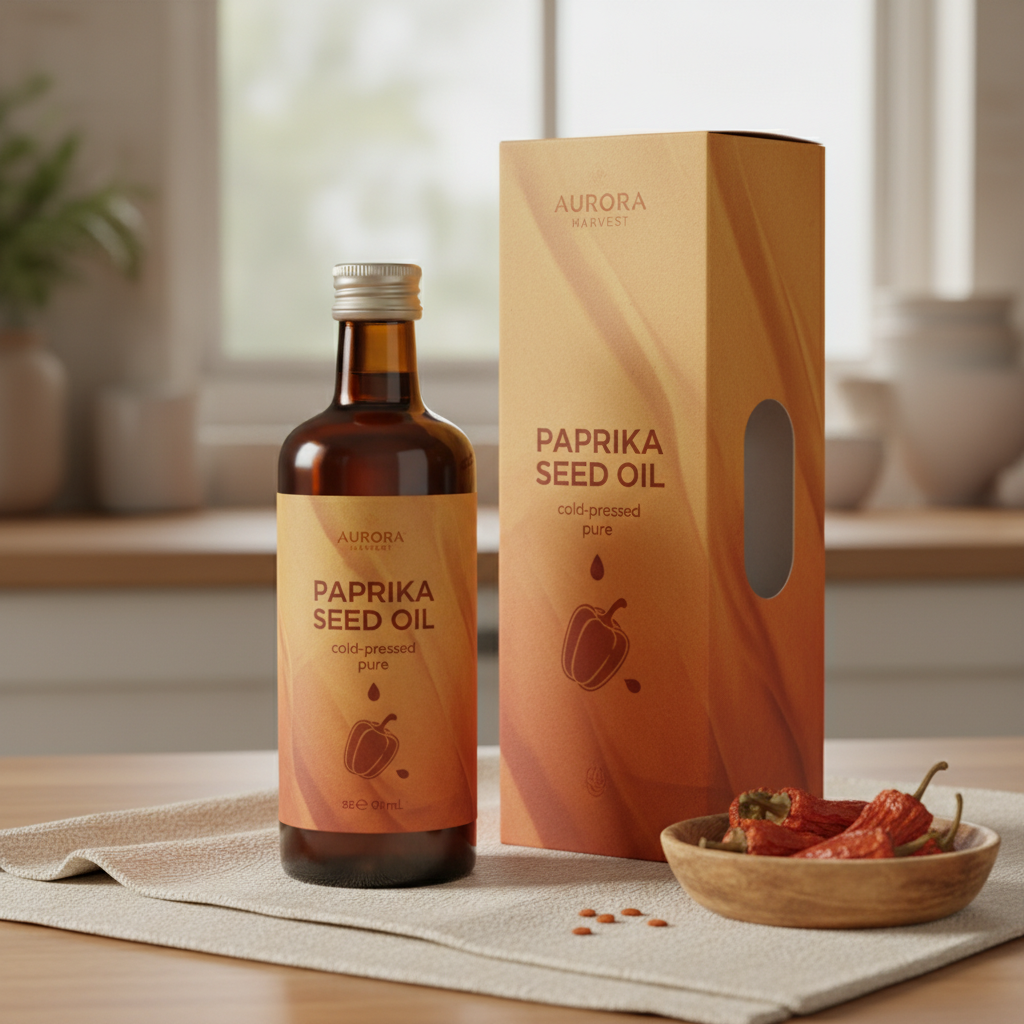
In simple terms, paprika seed oil is a lipid extracted from the seeds of the Capsicum annuum plant. While the fruit is prized for its color and heat, the seeds contain a rich concentration of unsaturated fatty acids and natural tocopherols. This oil is typically colorless or pale yellow, possessing a neutral taste profile that ensures it does not interfere with the primary flavor notes of the final food product.
Technically, the essence of this oil lies in its fatty acid composition, which is predominantly oleic and linoleic acids. This makes it highly stable under various thermal conditions, a critical requirement for industrial frying or baking. In the modern food industry, it serves as more than just a cooking medium; it is a functional carrier for fat-soluble vitamins and pigments, facilitating the uniform distribution of paprika extracts in emulsions.
From a humanitarian and ecological standpoint, the promotion of paprika seed oil reduces the reliance on palm oil and other environmentally contentious fats. By utilizing a byproduct of an existing crop, the industry minimizes land-use pressure and promotes a regenerative agricultural model. This makes it an ideal choice for brands that prioritize transparency and ethics in their supply chain.
Core Components and Performance Factors
The primary performance driver of paprika seed oil is its oxidative stability. Because it is rich in natural antioxidants, the oil resists rancidity longer than many other seed oils. This ensures that processed foods maintain a fresh taste and a longer shelf life without the need for excessive synthetic preservatives.
Another critical factor is emulsification capacity. Due to its molecular structure, paprika seed oil blends seamlessly with aqueous phases when combined with the right emulsifiers. This is particularly vital in the production of creamy sauces, dressings, and mayonnaise-style condiments where a smooth, non-separating texture is paramount.
Lastly, cost efficiency and scalability play a huge role. Since the seeds are a byproduct of the paprika powder and oleoresin industry, the raw material cost is significantly lower than that of boutique specialty oils. This allows manufacturers to scale their production of high-quality, sustainable products without incurring prohibitive ingredient costs.
Global Applications and Industrial Use Cases
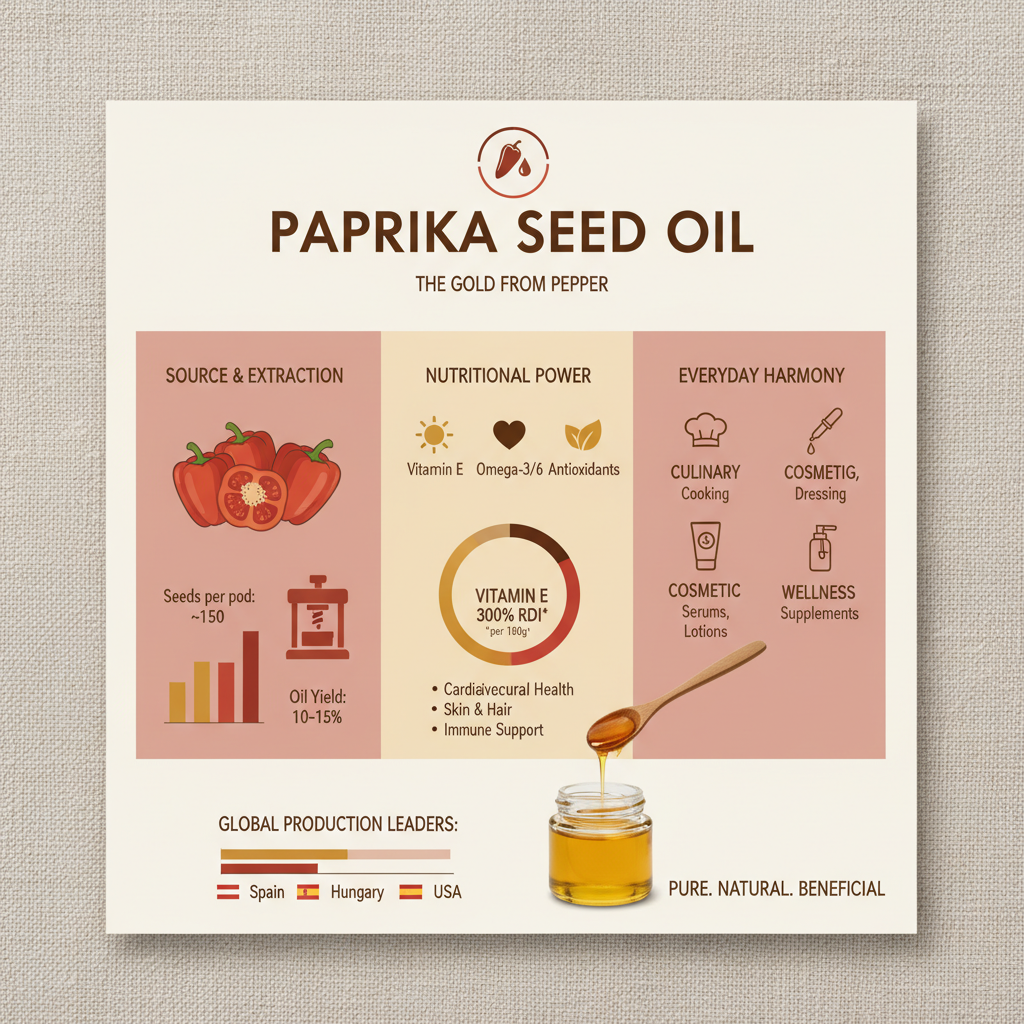
In the real world, paprika seed oil is utilized across diverse sectors. In the European snack industry, it is frequently used as a base for savory seasonings, providing the necessary fat content to carry flavor powders onto the surface of chips and crackers. In the cosmetics industry, its high vitamin E content makes it a favorite for skin-conditioning agents and natural lip balms.
Beyond consumer goods, this oil finds use in specialized industrial zones where bio-lubricants are required. Because it is biodegradable and non-toxic, it serves as an eco-friendly alternative to petroleum-based lubricants in food-grade machinery. In remote industrial zones, the ability to produce this oil locally from spice processing plants reduces logistics costs and empowers regional economies.
Efficiency Comparison of Paprika Seed Oil Extraction Methods
Long-Term Value and Sustainable Advantages
The adoption of paprika seed oil offers a profound logical and emotional value proposition. Logically, the cost savings and stability improvements directly impact the bottom line. Emotionally, brands can communicate a story of "zero waste" and "environmental stewardship" to their customers, fostering a deeper sense of trust and brand loyalty in an era where consumers are hyper-aware of the ecological cost of their food.
Furthermore, the long-term reliability of this oil source is bolstered by the stability of the paprika crop in key producing regions like Spain, Turkey, and China. By diversifying the application of the crop to include the seeds, the entire agricultural value chain becomes more resilient to market price fluctuations of the primary powder, ensuring a steady supply of a high-quality lipid for global manufacturers.
Future Trends and Technological Innovations
Looking forward, the integration of digital transformation and automation in extraction plants is set to optimize the purity of paprika seed oil. AI-driven sensors are now being used to monitor the temperature and pressure of extraction in real-time, ensuring that the delicate tocopherols and antioxidants are not degraded by excessive heat, resulting in a "premium grade" oil with superior nutritional profiles.
Green energy is also playing a role, with many extraction facilities moving toward solar-powered processing. This creates a truly carbon-neutral product, from the field to the bottle. Additionally, the rise of "precision nutrition" is leading to the development of fortified paprika seed oils, where specific omega-fatty acids are balanced to meet dietary health guidelines.
We also anticipate the growth of biotechnology in the refinement process. Enzymatic modification is being explored to tailor the viscosity of the oil, making it even more adaptable for high-speed industrial spray-drying processes. These innovations ensure that paprika seed oil remains at the forefront of the functional food movement.
Challenges and Expert Solutions in Production
Despite its benefits, the production of paprika seed oil faces challenges, primarily regarding the removal of residual capsaicinoids from the seeds. If not properly refined, the oil may carry an unwanted spicy heat that could clash with the intended flavor profile of a neutral product. Expert solutions involve a combination of degumming and precise deodorization to ensure a sensory-neutral base.
Another hurdle is the seasonal nature of the raw material. To overcome this, leading manufacturers are implementing advanced storage solutions, such as nitrogen-blanketing for the seeds, which prevents pre-extraction oxidation. This ensures that the oil produced in the off-season maintains the same quality and potency as that produced during the harvest peak.
Finally, scaling the extraction without sacrificing sustainability requires a balance between solvent efficiency and environmental impact. The shift toward supercritical CO2 extraction, while more capital-intensive, offers a solvent-free alternative that meets the strictest organic certifications. This investment in technology is the key to capturing the high-end "organic" and "natural" market segments.
Comparative Analysis of Paprika Seed Oil Production Challenges and Solutions
| Challenge Dimension |
Primary Constraint |
Expert Solution |
Impact Score (1-10) |
| Sensory Profile |
Residual Pungency |
Advanced Deodorization |
9 |
| Raw Material |
Seasonal Availability |
Nitrogen-Blanket Storage |
8 |
| Sustainability |
Chemical Solvent Residue |
Supercritical CO2 Tech |
10 |
| Stability |
Rapid Oxidation |
Tocopherol Stabilization |
7 |
| Production Cost |
High Initial CAPEX |
Circular Economy Integration |
8 |
| Purity |
Seed Impurities |
Centrifugal Filtration |
9 |
FAQS
Paprika seed oil is a byproduct of the spice industry, meaning it utilizes waste material that would otherwise be discarded. Unlike palm oil, which is linked to deforestation, paprika seed oil relies on an existing crop cycle, reducing the need for additional land use and promoting a circular economy in food manufacturing.
When properly refined and deodorized, paprika seed oil is neutral in taste and aroma. While the paprika fruit is spicy, the refined oil extracted from the seeds is processed to remove capsaicinoids, making it an ideal neutral carrier for other flavors or a healthy cooking oil that doesn't alter the dish's profile.
It is highly stable. Due to its rich content of oleic acid and natural antioxidants (tocopherols), it has a high smoke point and resists oxidative degradation better than many polyunsaturated oils, making it suitable for various thermal processing applications in the food industry.
Yes, provided it is extracted using mechanical cold-pressing or supercritical CO2 extraction rather than chemical solvents. Its high vitamin E content and skin-compatible lipid profile make it an excellent ingredient for organic skincare, serums, and lip products.
Thanks to its natural antioxidant properties, paprika seed oil often exhibits a longer shelf life than soy oil. While similar to high-oleic sunflower oil, its unique composition helps prevent the development of off-flavors, provided it is stored in cool, dark conditions away from oxygen.
Manufacturers can replace a percentage of their current refined oils with paprika seed oil to enhance their sustainability profile. It is compatible with most existing mixing and emulsification equipment and can be sourced directly from spice extract suppliers who offer integrated seed oil production.
Conclusion
In summary, paprika seed oil stands as a pivotal innovation in the intersection of food science and sustainable agriculture. By transforming a processing byproduct into a high-value functional lipid, the industry achieves a rare balance of economic profitability, technical performance, and environmental responsibility. From its superior oxidative stability and emulsification properties to its role in the circular economy, this oil provides a tangible path for manufacturers to evolve their product lines toward a cleaner, greener future.
As consumer preferences continue to shift toward transparency and sustainability, the strategic adoption of such bio-based ingredients will define the market leaders of the next decade. We encourage food technologists and procurement specialists to explore the versatility of this lipid to enhance both the quality of their products and the integrity of their brand. To learn more about our premium extracts and seed oil solutions, visit our website: www.hongrispice.com


 English
  Afrikaans
  Albanian
  Amharic
  Arabic
  Armenian
  Azerbaijani
  Basque
  Belarusian
  Bengali
  Bosnian
  Bulgarian
  Catalan
  Cebuano
  Corsican
  Croatian
  Czech
Czech  Danish
  Dutch
Dutch  Esperanto
  Estonian
  Finnish
  French
  Frisian
  Galician
  Georgian
  German
  Greek
Greek  Gujarati
  Haitian Creole
  Hausa
Hausa  Hawaiian
  Hebrew
  Hindi
Hindi  Miao
Miao  Hungarian
  Icelandic
  Igbo
Igbo  Indonesian
  Irish
Irish  Italian
  Japanese
  Javanese
  Kannada
  Kazakh
  Khmer
Khmer  Rwandese
  Korean
  Kurdish
  Kyrgyz
  Lao
Lao  Latin
Latin  Latvian
  Lithuanian
  Luxembourgish
  Macedonian
  Malgashi
  Malay
Malay  Malayalam
  Maltese
  Maori
Maori  Marathi
  Mongolian
  Myanmar
  Nepali
  Norwegian
  Norwegian
  Occitan
  Pashto
  Persian
  Polish
  Portuguese
  Punjabi
  Romanian
  Russian
  Samoan
  Scottish Gaelic
  Serbian
  Sesotho
  Shona
Shona  Sindhi
  Sinhala
  Slovak
  Slovenian
  Somali
  Spanish
  Sundanese
  Swahili
  Swedish
  Tagalog
  Tajik
Tajik  Tamil
Tamil  Tatar
Tatar  Telugu
  Thai
Thai  Turkish
  Turkmen
  Ukrainian
  Urdu
Urdu  Uighur
  Uzbek
Uzbek  Vietnamese
  Welsh
Welsh  Bantu
Bantu  Yiddish
  Yoruba
  Zulu
Zulu